
It is a little after ten at night in Karachi. Your dog has turned away from dinner for the second day running, and is lying somewhere she does not usually lie. Nothing is obviously wrong. Nothing is obviously right either.
Your clinic closed hours ago. So you do what most people do: you post in a WhatsApp group, you search, and you read a dozen contradictory answers from strangers. By midnight you are choosing between driving across the city on a guess, or waiting until morning and hoping the guess was the safe one.
That hour is where Vetline started. Not with a shortage of veterinary skill, which Pakistan does not lack, but with everything arranged around it.
What an online pet consultation actually is
An online pet consultation is a scheduled video conversation with a qualified veterinarian. You describe what you have noticed, answer questions about your pet's history and routine, and show the vet what you are seeing on camera.
It is not a diagnosis, and it is not an emergency service. Its value is guidance, context and direction, which is usually what a worried owner needs before anything else. In practice the question is rarely what the diagnosis is. It is whether this needs a vet tonight or can wait until morning, and that is answerable.
Almost nobody in Pakistan has had a practical way to ask a veterinarian a small question. That gap is not a medical problem. It is a logistics problem.
What pet owners in Pakistan told us
We asked Pakistani pet owners what the hardest part of caring for their animal is, and let them pick up to three. Finding a trusted vet came first, named by 59%. Expensive consultations came second at 45%. The absence of any online consultation option was named by 27%.
Trust ahead of cost is worth sitting with. It means another directory of clinic phone numbers does not solve the problem. Knowing a veterinarian is genuinely qualified is the thing people are missing.
The hidden cost of scattered records
Ask most owners for their animal's medical history and you get an archaeology project. A vaccination card in a drawer, if it has not been lost. A prescription photographed and buried in a chat from eighteen months ago. A diagnosis remembered only as roughly what the last vet said.
This is not carelessness. There has simply been nowhere for that information to live. The consequences are real:
- Treatments get repeated because nobody can confirm what was already tried
- Boosters are missed, since nothing announces a due date until it matters
- A new clinic starts from nothing, and the animal is assessed without its own history
- Chronic patterns stay invisible, because no single visit is enough to reveal them
A veterinarian working without history is working with one hand tied. The information exists. It is just spread across three phones, a drawer and someone's memory.
What is inside the Vetline app
Seven things, built to work together rather than as separate tools:
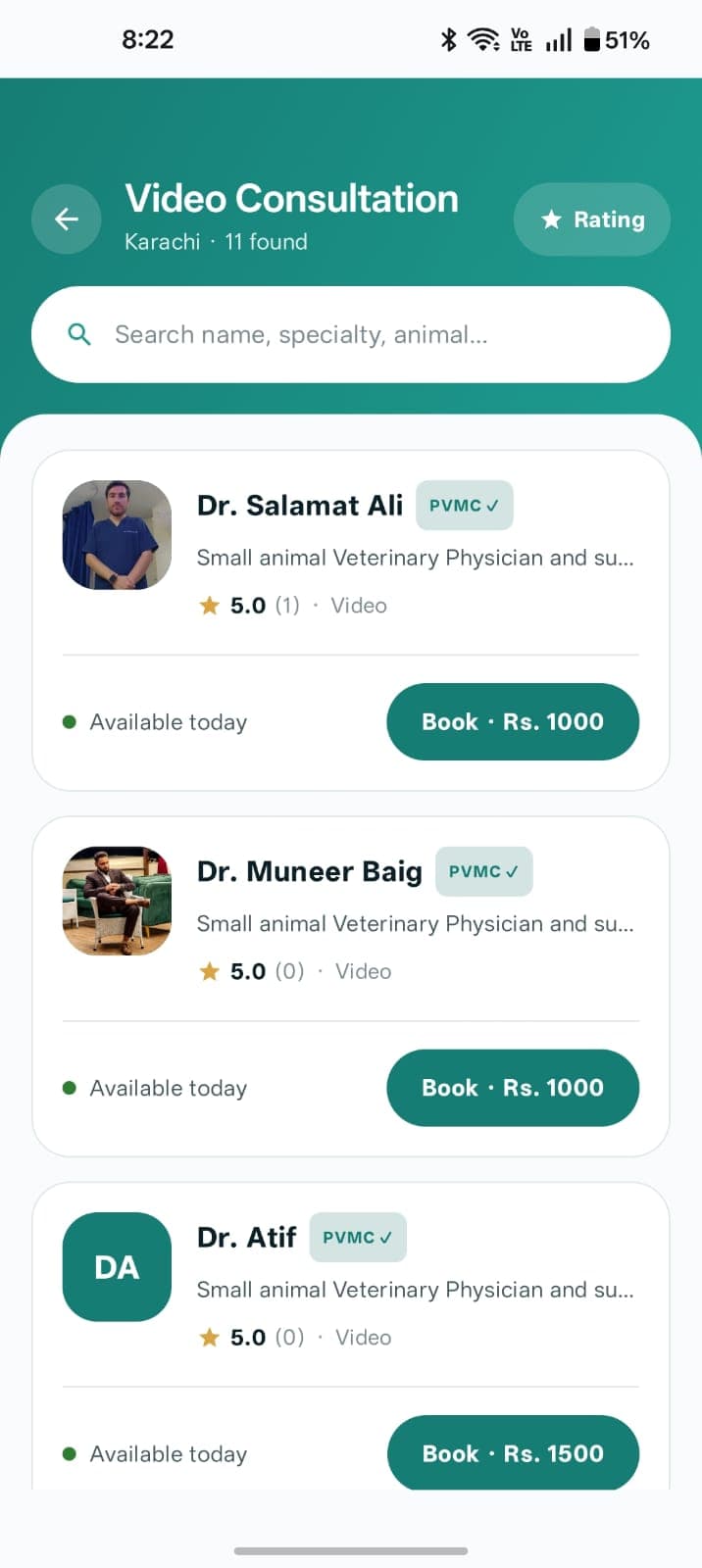
Video consultation
Book a slot and speak to a PVMC-registered veterinarian by video, with the fee shown before you book.
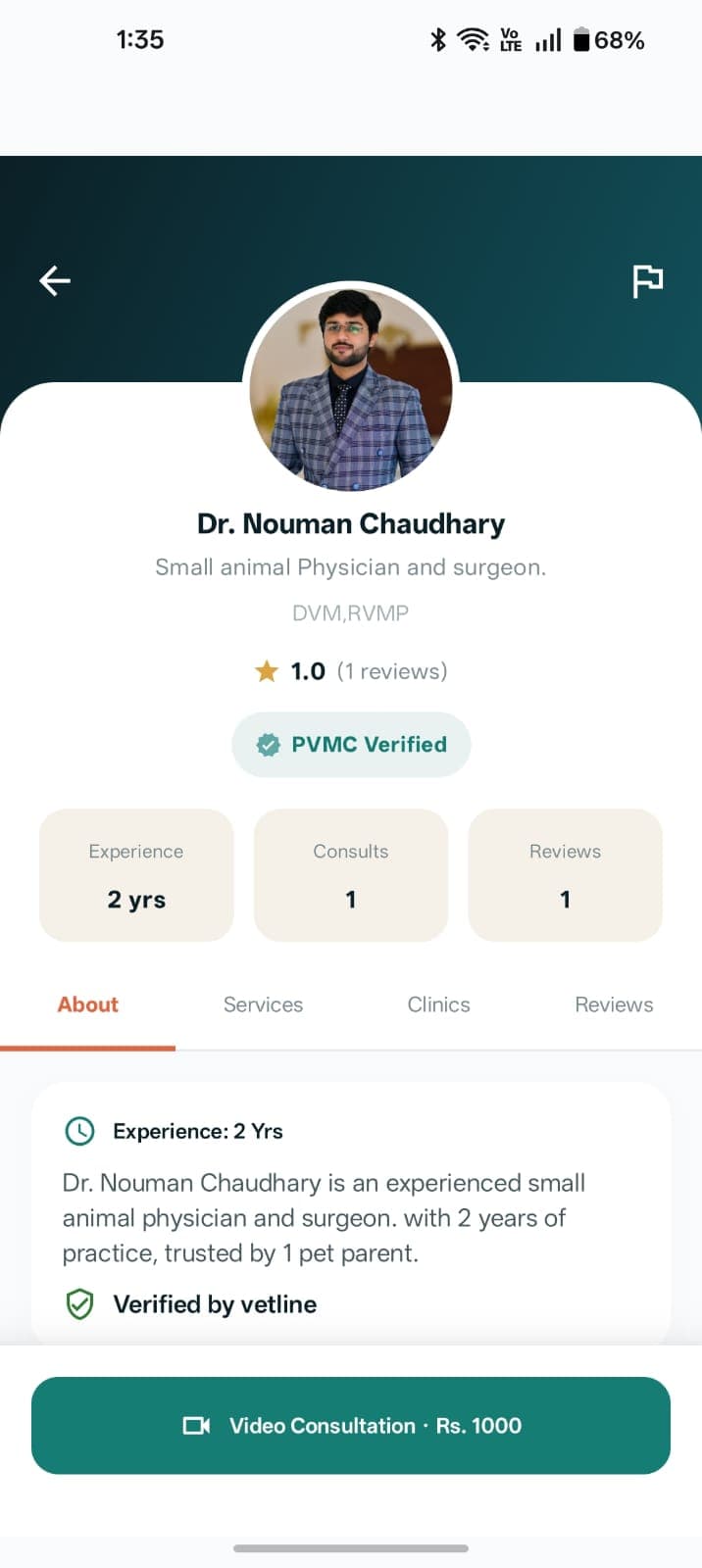
Verified vets
Every veterinarian is checked against the Pakistan Veterinary Medical Council register, with experience and reviews on their profile.
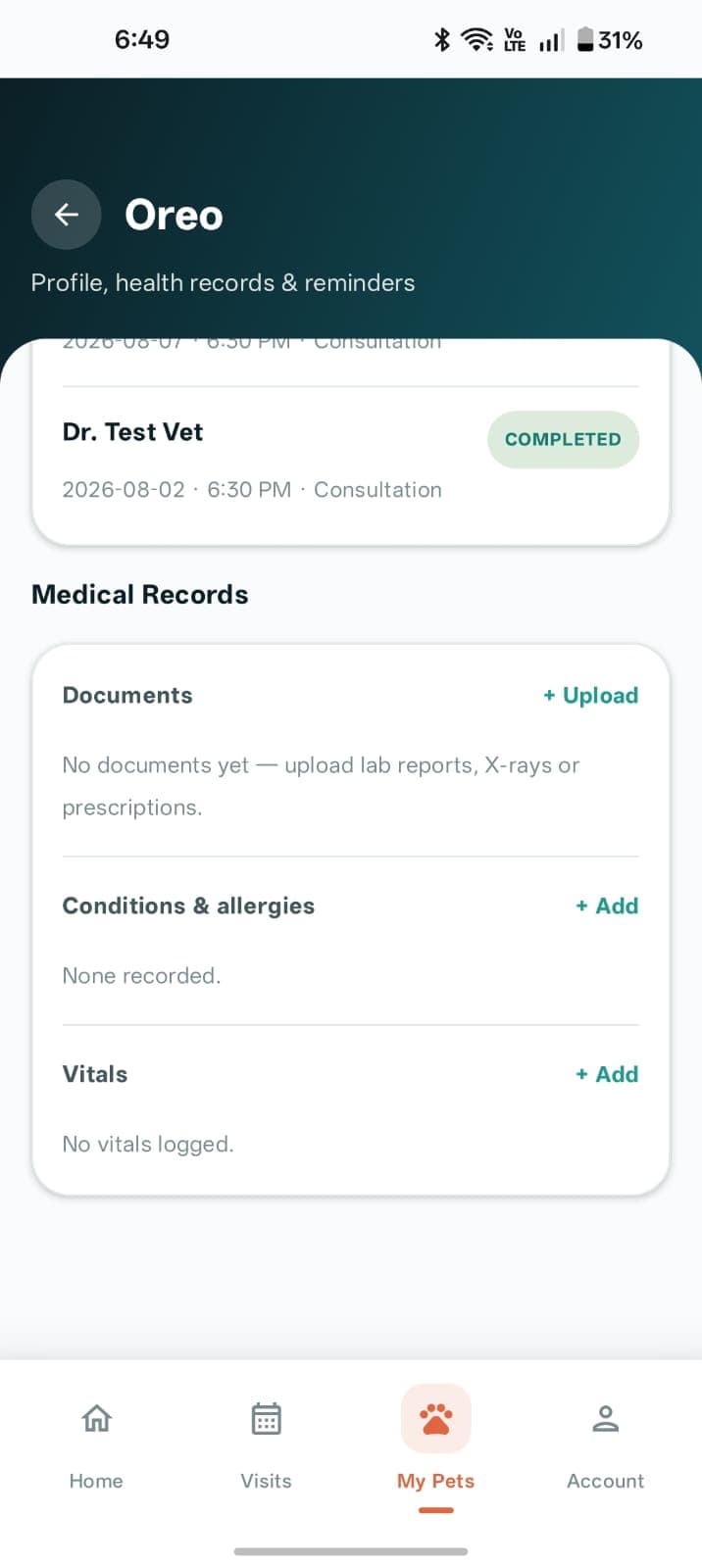
Pet records and documents
Visits, prescriptions, conditions, vitals and uploaded documents in one profile per animal.
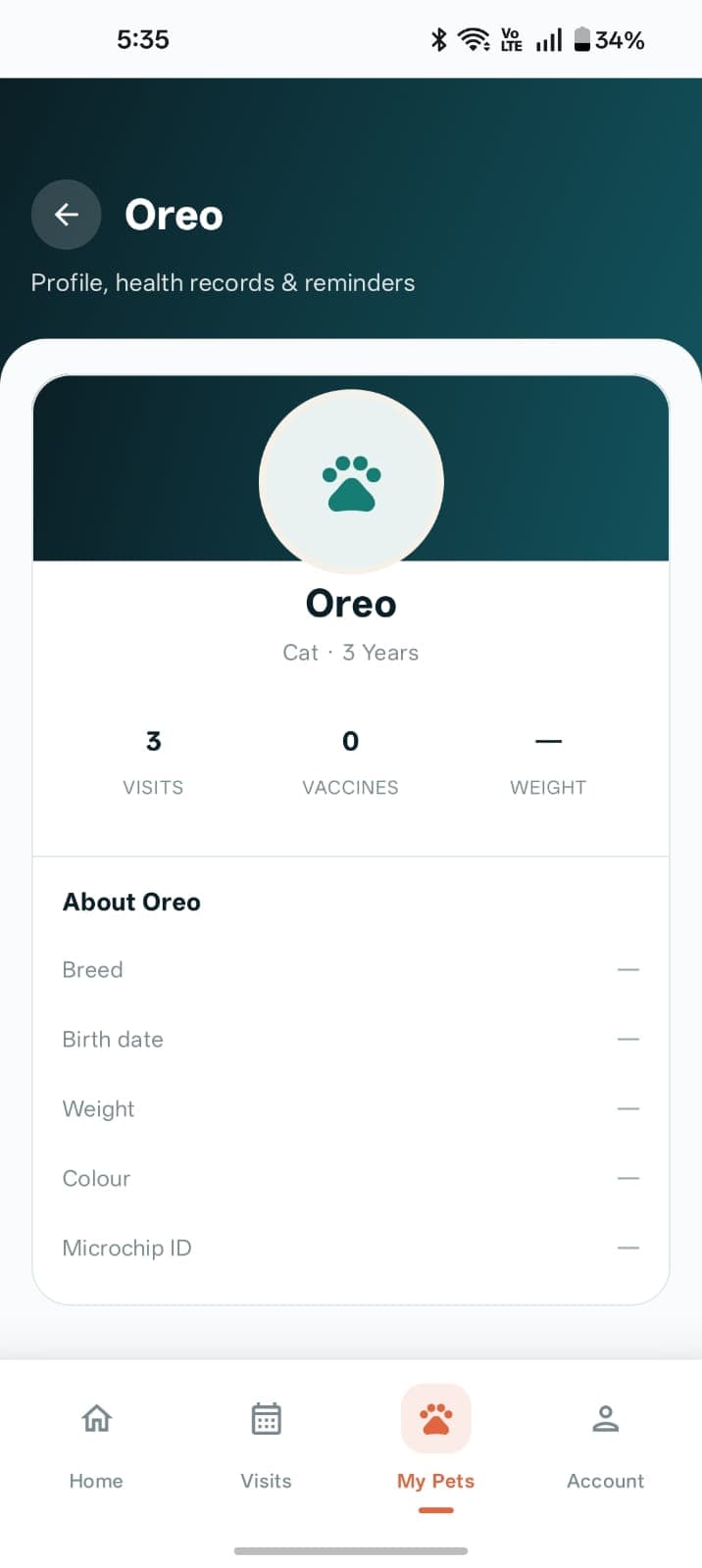
Vaccination reminders
Due dates tracked for you, so a booster is not missed because nothing announced it.
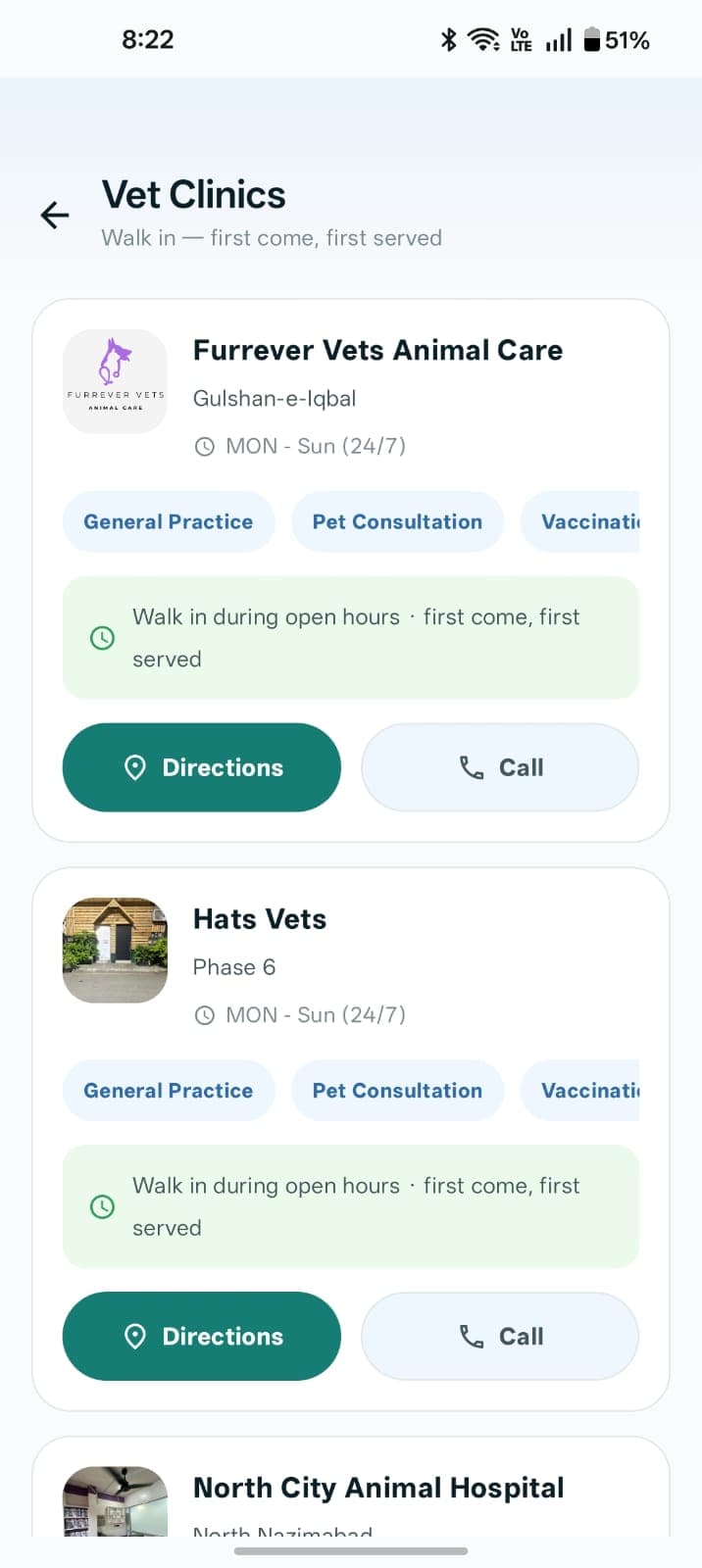
Clinic listings
Nearby clinics with directions and contact details, so the after-hours search does not start from zero.
Consultation reminders
A prompt before your appointment, and before a follow-up is due.
Pet communities
A place to talk to other owners, kept separate from clinical advice so the two are never confused.
Individually, none of these is novel. Together, and built for how care actually works here, they change what a worried owner can do at ten at night. If you want the detail on how a consultation itself works, including when it is the wrong choice, that is covered on our online pet consultation page.
When you should go to a clinic instead
Some situations need in-person care immediately, and no video call changes that. Go straight to a clinic or emergency service if you see:
- Difficulty breathing, choking, or persistent open-mouth breathing in a cat
- Suspected poisoning, or anything swallowed that should not have been
- A road accident, a fall, or any significant trauma
- Repeated straining to urinate with little or no result, particularly in a male cat
- A distended or hard abdomen, or unproductive retching
- Seizures, collapse, or unresponsiveness
- Heavy bleeding that does not stop, or a deep wound
- Difficulty giving birth
Online consultation is a front door to veterinary care, not a substitute for the clinic behind it.
From reactive to proactive
The longer-term point is not faster emergencies. It is fewer of them. Records that reveal a pattern, reminders that arrive before a booster lapses, and guidance early enough that a small symptom stays small.
That thinking extends beyond pets. For livestock owners, the cost of noticing late is not only an unwell animal but a livelihood. Herd health management is a direction we are actively building toward, and we will be clear about what is available and what is still ahead.
Getting access
We are bringing people onto Vetline in stages rather than opening the doors and hoping. Partly so the experience holds up, and partly because the people who use it early shape what it becomes.
If you are a pet owner in Karachi or anywhere in Pakistan, the app is on Google Play and you can start today. On iPhone, leave your email and we will write when it lands. If you are a veterinarian or a clinic, we would like to hear from you directly.
Common questions
What problem is Vetline trying to solve?
Not a shortage of veterinary skill, which Pakistan does not lack, but everything arranged around it: no practical way to ask a small question, medical history scattered across drawers and chat threads, and preventive care that slips because nothing announces a due date.
Is Vetline available to use now?
Yes, on Android: the app is on Google Play and you can download it and book. The iPhone version is not out yet, and you can leave your email to be told when it is.
Is Vetline only for pets?
Dogs and cats are what the app serves today. Livestock health management is a direction we are actively building toward, because the cost of noticing late is highest for animals people depend on for a living.