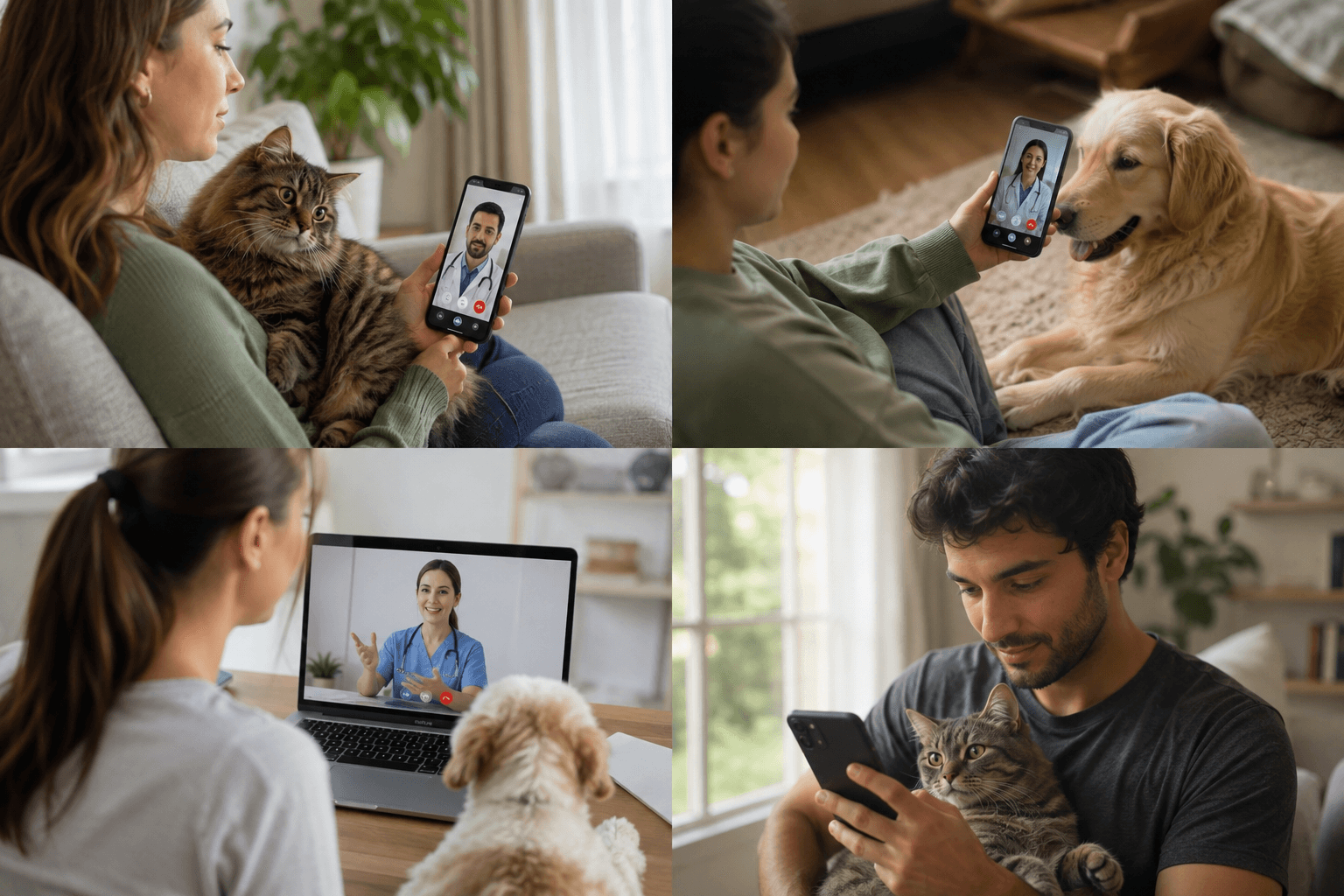
In Karachi, the hardest part of pet care isn't the vet. It's reaching one.
A puppy skips dinner twice in one evening. By ten o'clock the clinics are closed, so the question goes to a WhatsApp group instead, where it collects five confident and contradictory answers before midnight. Wait and watch. Give him an egg. Take him to the clinic that stays open late, maybe. Nobody in that group is a veterinarian. They are answering because the person who asked had nowhere better to ask.
This is the gap Vetline.pk is built around. Not a shortage of good vets in Pakistan, but the distance between an owner at ten at night and a qualified answer.
The problem is access, not expertise
Vetline.pk surveyed pet owners in Pakistan before building anything. Finding a vet they could trust came out as the biggest problem, named by 59%. Cost followed at 45%, and 27% said the absence of any online option was what held them back.
That order is worth sitting with, because it is not the order most people assume. Trust beat money. Owners were less troubled by what a consultation cost than by not knowing whether the person charging for it was qualified. Directory listings rarely say. A recommendation in a Facebook group says even less.
Underneath that sit two practical problems. Getting a frightened cat across Karachi in afternoon traffic can take longer than the appointment it is travelling to, and cost more in fuel than the consultation fee. And fees themselves tend to stay invisible until the bill arrives.
What Vetline.pk is
Vetline.pk is an animal healthcare company based in Karachi, founded in 2026 by Haziq Khatri. Its mobile app connects owners to 18+ licensed veterinarians for video consultations, home visits across Karachi, vaccinations, and pet food, with each animal's medical history kept in one place. The app is on Android through Google Play; the iPhone build is finished and with beta testers while the Apple developer account is set up, so a public iOS release follows shortly.
Every veterinarian on the platform is checked against the Pakistan Veterinary Medical Council register before being listed, and the badge on a profile means that check has been done rather than that a form was filled in. Their experience ranges from a year to a decade. Most treat cats and dogs; a few also see birds and exotics. Profiles carry qualifications, years in practice and the consultation fee.
Video consultations are for the questions, not the emergencies
An online consultation works best for a particular kind of problem: the limp that appeared yesterday, the rash that might be nothing, the puppy refusing food, the question of whether something can wait until morning. The owner picks a vet, picks a slot, and talks to them on camera.
Showing beats describing. A dog that has been scratching for a week looks like one thing in a sentence and another thing entirely when the camera is held against the skin. Owners are also encouraged to record a short clip beforehand, since limping and coughing almost never perform on request.
It is tempting, at eleven at night, to type the symptoms into a chatbot instead. The answer arrives instantly and sounds authoritative, which is precisely the risk: it has not seen the animal, knows nothing of its history, and carries no responsibility for being wrong. A licensed vet does. The real cost of a confident wrong answer is usually not the answer, it is the hours spent waiting at home because of it.
Home visits exist because the journey is often the problem
A home visit starts with an address, the pet, what the owner has noticed, and the times that suit them. Vetline calls back to confirm the slot and the fee, then a registered vet examines the animal at home.
There is a clinical argument for this, not just a convenience one. Stress raises heart rate and breathing, so a cat that has spent forty minutes in a carrier and twenty in a waiting room can produce readings that describe the trip rather than the illness. The limits are real and worth stating plainly: no X-rays, no surgery, no hospital stay, no instant laboratory results. Coverage depends on which vets are free near the address, which is confirmed on the call rather than promised in advance.
Vaccinations and records are the quiet half
Vaccination can happen at home or at a listed clinic. The vet examines the animal first, then the dose and date go onto the pet's profile and the app tracks when the next one is due.
Rabies is endemic in Pakistan, which makes a pet's vaccination record a household health matter rather than paperwork. Dogs usually receive a combined shot covering distemper, parvovirus, adenovirus and parainfluenza; cats one covering panleukopenia, herpesvirus and calicivirus. The vet confirms the schedule for the individual animal.
Everything else lands in the same profile: consultation notes, prescriptions, ongoing conditions, weight, uploaded documents. This sounds like filing until the day it is needed. Vaccination cards get lost, clinics change, and photographs of old prescriptions sink down a camera roll, which is how animals end up treated twice for the same thing or not boosted at all. The record belongs to the owner and moves with them. Pet food sits on the same platform, for the straightforward reason that the person asking a vet what to feed a four-month-old Persian should not then have to go somewhere else to buy it.
Choosing between the three
Video consultation
Use it for: is this serious, follow-ups, diet, behaviour, puppy and kitten questions. It cannot: examine, run bloodwork, or take an X-ray.
Home visit
Use it for: vaccinations, routine checks, anxious cats, multi-pet households — avoiding the journey and the wait. It cannot: do X-rays, surgery, hospital stays or instant lab results.
Clinic
Use it for: emergencies, imaging, surgery, anything needing equipment. It is the right place whenever care needs hands and a building.
When to close the app and drive
An emergency needs hands, equipment and a building. No video call substitutes for that, and arranging a home visit takes time an emergency does not have.
- Breathing difficulty, or any open-mouth breathing in a cat
- Suspected poisoning, or something swallowed that should not have been
- After a road accident, a fall or a serious injury
- A male cat straining to urinate with little coming out — a blocked bladder, and a few hours from fatal
- A hard, swollen abdomen, or retching that brings nothing up
- Seizures, collapse, heavy bleeding, or a difficult birth
Vetline.pk is explicit about this in the app. It supports veterinary care; it does not replace being in the room.
What comes next
Easier access tends to produce earlier questions, which is the actual goal. An owner who can ask about a diet change or a behaviour shift for the price of a short call asks months before the thing becomes an emergency. Beyond pets, livestock health tracking and herd management are in development and not yet live. For a country where a family's income can rest on the health of a few animals, that is the larger version of the same problem: expertise exists, but reaching it in time is the hard part.
For now it is cats and dogs, 18+ veterinarians, and a shorter route between a worried owner and someone qualified to answer.
Common questions
What is Vetline.pk?
A Karachi-based animal healthcare company, founded in 2026, whose app connects pet owners to licensed veterinarians for video consultations, home visits across Karachi, vaccinations and pet food, with each animal's medical history kept in one place. It is on Android via Google Play, with an iOS release to follow.
Are the veterinarians actually qualified?
Every vet is checked against the Pakistan Veterinary Medical Council register before being listed, and the badge on a profile means that check has been done. Their experience ranges from a year to a decade; profiles carry qualifications, years in practice and the consultation fee.
How much does a consultation cost?
Average fees start at Rs. 500, and each vet sets their own. The number on the profile is the number you pay; Vetline adds nothing at the end. Home visits and vaccinations are quoted while booking, because what they involve varies more.
When should I use a video consultation instead of going in?
Video works best for the questions rather than the emergencies: a limp that appeared yesterday, a rash that might be nothing, a puppy refusing food, or whether something can wait until morning. For anything needing an examination, imaging, surgery or lab results, you need a clinic.
When should I skip the app and go straight to a clinic?
For breathing difficulty or any open-mouth breathing in a cat, suspected poisoning or a swallowed object, road accidents or serious injury, a male cat straining to urinate, a hard swollen abdomen, unproductive retching, seizures, collapse, heavy bleeding, or a difficult birth. These need hands, equipment and a building, immediately.